How Corporate Apparel and Uniforms Shape Your Brand Identity
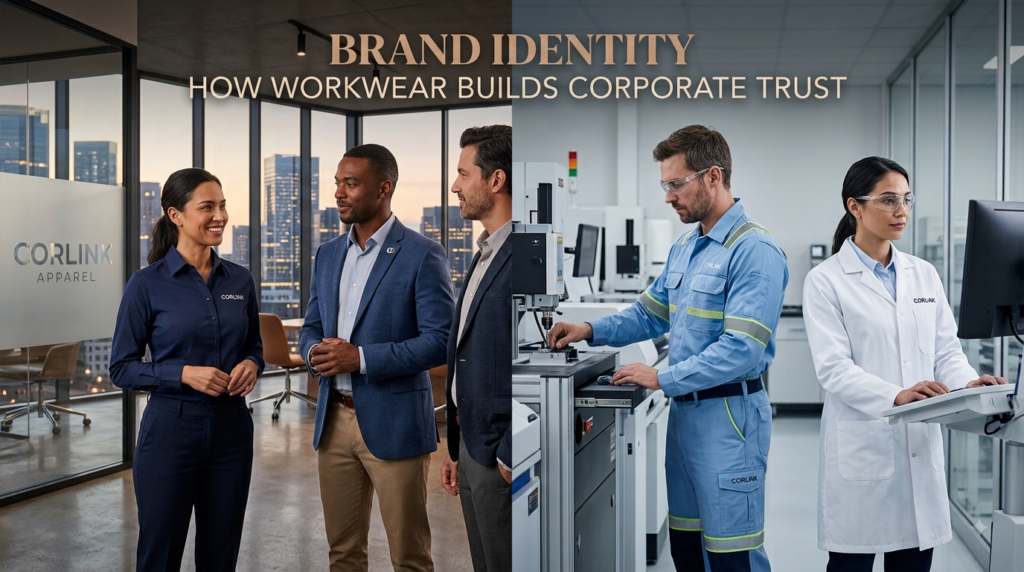
Brand identity is the visual and physical representation of your company’s core values, mission, and professional standards. While many businesses focus heavily on digital assets like websites and social media, they often overlook one of their most powerful touchpoints: their workforce.
Every time your staff interacts with clients, vendors, or the public, their appearance sends a immediate message. Therefore, custom workplace attire and high-quality industrial garments serve as a living extension of your business reputation.
What Is Brand Identity?
Brand identity refers to the visible and recognisable elements that represent a business and differentiate it from competitors.
These elements can include:
- Logo and visual symbols
- Brand colours
- Typography
- Packaging
- Website design
- Marketing materials
- Tone of communication
- Corporate uniforms
- Customer experience
- Workplace appearance
A strong brand identity creates consistency across different customer touchpoints. Whether someone visits a company’s website, enters its office, speaks to an employee, or sees its team at an event, the experience should feel connected to the same brand.
This is where corporate clothing and staff uniforms become particularly valuable.
Why Are Uniforms Important for Brand Identity?
Employees are often the most visible representatives of a company. When employees interact with customers, suppliers, visitors, or business partners, their appearance contributes to how the organisation is perceived.
A consistent uniform helps create a visual connection between the employee and the company.
Instead of every employee choosing their own style of clothing, a professionally designed uniform establishes a consistent appearance. This can make an organisation look more organised, established, and professional.
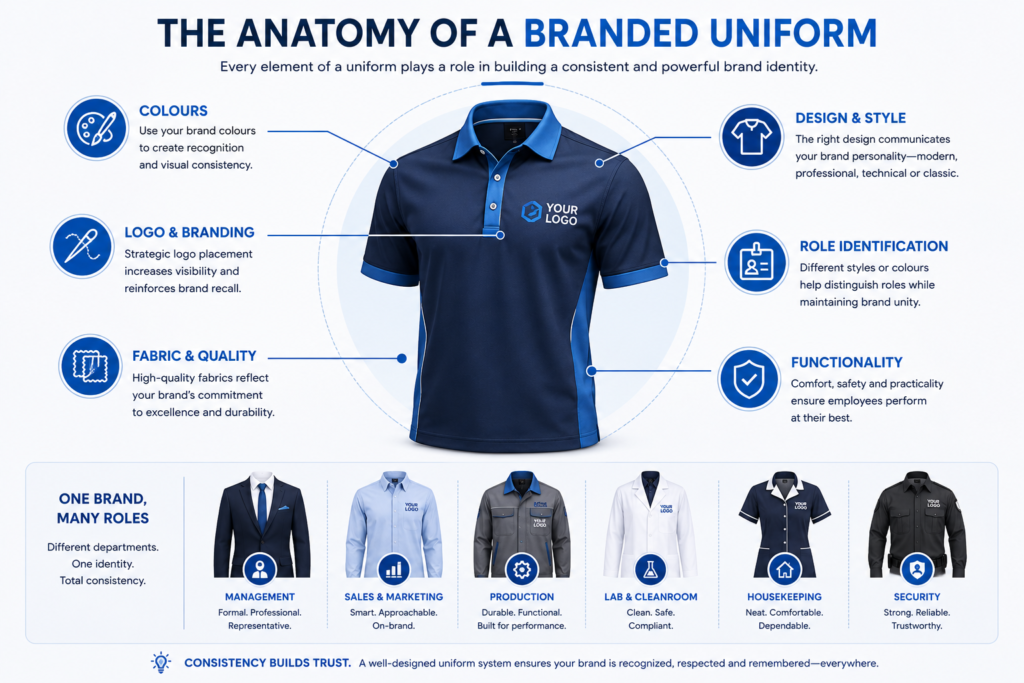
A uniform can also reinforce brand identity through:
- Brand colours
- Logo placement
- Consistent design
- Fabric selection
- Garment style
- Employee role identification
- Custom embroidery or printing
The result is a physical representation of the brand that employees carry throughout the workplace and beyond.
Why Workwear Plays a Core Role in Brand Identity
First impressions are formed within seconds. When your employees wear consistent, well-crafted apparel, your business projects authority and reliability instantly.
Here is how strategic workwear reinforces your brand identity:
1. Visual Consistency Across Departments
Consistency is the foundation of brand recognition. Whether your workforce operates in corporate offices, manufacturing floors, or sterile cleanroom environments, unified apparel ensures your brand is immediately recognizable.
2. Built-in Credibility and Customer Trust
Customers naturally associate polished, standardized uniforms with competence and safety. When a technician or staff member steps onto a job site in clean, professional gear, client trust increases immediately.
3. Team Unity and Employee Pride
Uniforms do more than communicate outward to clients; they also influence internal culture. Wearing official company apparel fosters a sense of belonging among team members, reinforcing internal values alongside external image.
Custom Uniforms Help Differentiate Your Brand
Not every business should use the same uniform design.
A generic uniform may provide consistency, but a customised corporate uniform can make a brand more distinctive.
Customisation can include:
- Company logo
- Brand colours
- Custom embroidery
- Employee names
- Department identification
- Different styles for different roles
- Custom collars and cuffs
- Industry-specific garment designs
For example, management staff may require a formal corporate appearance, while production employees may need durable industrial garments. Hospitality teams may require a more polished appearance, while maintenance teams may prioritise functionality.
The uniform should reflect the role while maintaining the broader brand identity.
Different Departments Can Have Different Uniforms
Brand consistency does not mean every employee must wear exactly the same garment.
Large organisations can create a uniform system where different departments have specialised designs while still sharing common brand elements.
For example:
| Department | Possible Uniform |
|---|---|
| Management | Formal corporate wear |
| Sales | Branded shirts or polo shirts |
| Security | Security uniform |
| Housekeeping | Functional housekeeping uniform |
| Production | Industrial workwear |
| Laboratory | Lab coat |
| Cleanroom | Cleanroom apparel |
| Maintenance | Durable maintenance garments |
The logo, colour system, embroidery style, or other visual elements can connect these different uniforms to the same brand.
Corporate Uniforms Strengthen Brand Identity Outside the Workplace
The impact of branded uniforms isn’t limited to offices and factories.
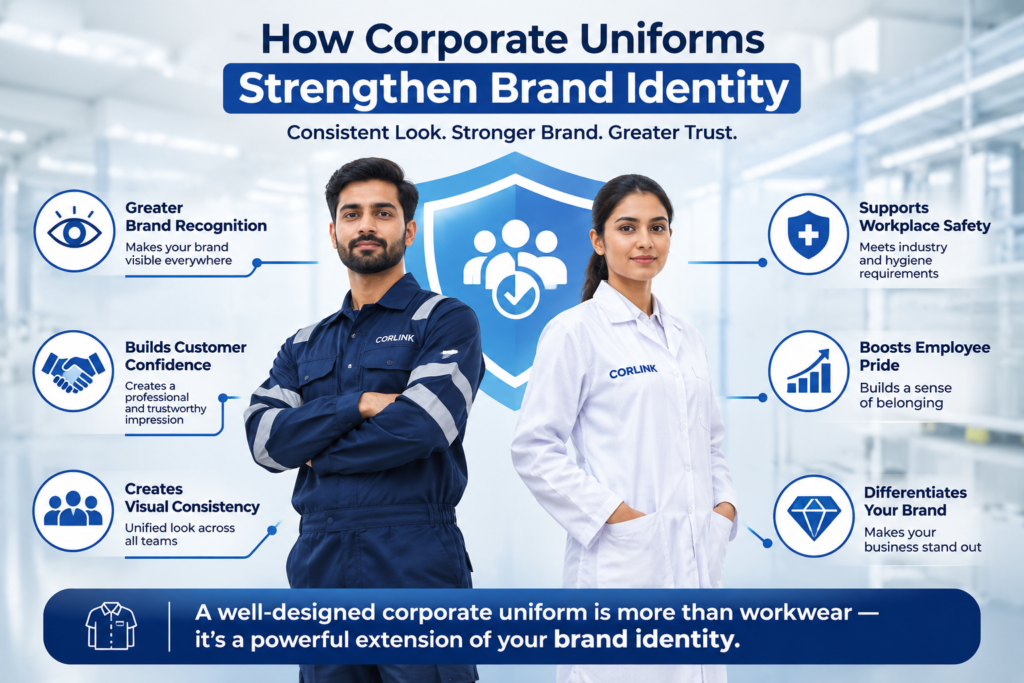
Employees may wear company uniforms while:
- Travelling between locations
- Meeting customers
- Attending trade shows
- Visiting suppliers
- Working at customer sites
- Participating in corporate events
- Providing field services
Every public appearance becomes another opportunity for brand exposure.
This makes uniforms particularly valuable for businesses whose employees regularly interact with the public.
How to Build a Brand Identity Through Uniforms
Creating a branded uniform should be approached strategically rather than simply adding a logo to an existing garment.
Step 1: Understand Your Brand
Identify your company’s personality.
Is your brand:
- Professional?
- Modern?
- Technical?
- Premium?
- Approachable?
- Traditional?
- Safety-focused?
The uniform should support this positioning.
Step 2: Identify Employee Requirements
Understand what employees actually need from their clothing.
Consider:
- Job responsibilities
- Workplace environment
- Safety requirements
- Hygiene requirements
- Movement
- Climate
- Working hours
- Washing frequency
Step 3: Select Suitable Fabrics
Fabric selection affects comfort, durability, appearance, and performance.
The appropriate material will depend on the environment in which the garment is used.
Step 4: Develop the Design
Decide on:
- Colours
- Garment style
- Logo placement
- Embroidery
- Department identification
- Accessories
- Fit
Step 5: Create Consistency
Once the design is approved, maintain consistent specifications across employee uniforms.
This ensures that the brand looks the same across different departments and locations.
Step 6: Review and Improve
Employee feedback can reveal practical issues with fit, comfort, durability, or functionality.
Regularly reviewing uniforms helps ensure that they continue to meet both employee and business requirements.
Aligning Industrial Garments with Your Corporate Brand Identity
A strong brand identity requires continuity across every functional tier of your organization. Different workplace environments demand distinct garment specifications, yet the overall visual narrative must remain cohesive.
At Corlink, we help businesses bridge the gap between technical garment performance and corporate aesthetics:
-
Corporate Staff Attire: Clean, tailored uniforms for administrative, managerial, and client-facing teams reflect professional distinction.
-
Industrial Workwear: Durable, purpose-built clothing engineered to withstand tough conditions while maintaining a sharp visual standard.
-
Cleanroom & Specialized Garments: Lint-free, antistatic, and protective apparel for critical cleanroom or lab areas where hygiene and precision directly define your company’s reputation.
-
Safety & Security Apparel: High-visibility and protective gear that demonstrates a commitment to employee safety and compliance.
Key Elements of an Effective Uniform Strategy
To successfully reflect your brand identity through apparel, keep these core design principles in mind:
-
Color Alignment: Incorporate your primary brand colors into trims, collars, or main fabrics for effortless visual connection.
-
Quality Fabric Selection: Faded or poorly fitted garments erode professional credibility quickly. Choosing premium, durable textiles preserves your image over time.
-
Functional Customization: Garments must fit the operational needs of the worker—comfort and utility enhance confidence, which directly reflects on your brand.
Common Mistakes When Using Uniforms for Brand Identity
Businesses can weaken their visual identity if uniform planning is not handled properly.
Some common mistakes include:
Using Too Many Colours
Too many colours can make a uniform look inconsistent and reduce brand clarity.
Ignoring Employee Comfort
An uncomfortable uniform is unlikely to create a positive employee experience.
Choosing Appearance Over Function
A uniform may look attractive but still be unsuitable for the working environment.
Inconsistent Branding
Different logo sizes, colours, or placements across departments can create an inconsistent brand image.
Using Poor-Quality Materials
Low-quality garments can wear out quickly and may negatively affect the company’s professional image.
Choosing the Right Corporate Uniform Partner for Your Brand Identity
The supplier you choose can have a significant impact on the success of your uniform programme.
Look for a manufacturer or supplier that understands both garment quality and your operational requirements.
Important factors include:
- Product quality
- Customisation capabilities
- Fabric options
- Industry experience
- Quality control
- Delivery timelines
- Size availability
- Ability to handle bulk orders
- After-sales support
Corlink, formerly Gupta Textiles, states that it has been providing industrial garments since 2007 and offers customised solutions based on individual client requirements. Its website highlights corporate garments, industrial garments, cleanroom-related clothing, antistatic garments, and other workplace apparel.
Build a Stronger Brand Identity with Corlink
Ultimately, your workforce represents your brand everywhere they go. By investing in tailored corporate uniforms and specialized industrial apparel, you turn daily workwear into a competitive advantage.
For over 15 years, Corlink (formerly Gupta Textiles) has delivered customized, high-performance garment solutions to businesses worldwide. From cleanroom apparel to corporate staff uniforms, we ensure your team looks professional, stays safe, and projects a cohesive brand identity.
Ready to elevate your workplace image? Contact the team at Corlink today to discuss customized uniform solutions designed for your industry.
Frequently Asked Questions About Brand Identity and Corporate Uniforms
What is brand identity?
Brand identity is the collection of visual and experiential elements that represent a company, including its logo, colours, typography, messaging, customer experience, and employee presentation.
How do uniforms contribute to brand identity?
Uniforms contribute to brand identity by creating visual consistency, improving employee recognition, reinforcing brand colours and logos, and presenting a professional image to customers.
Can corporate uniforms be customised?
Yes. Corporate uniforms can be customised through colours, garment styles, logo embroidery, employee names, department identification, and other design elements.
Should every department have the same uniform?
Not necessarily. Different departments may require different garments based on their roles and working environments. However, shared brand elements can maintain overall brand consistency.
Why is uniform quality important for brand identity?
Employees wearing worn-out or uncomfortable clothing can negatively affect a company’s professional appearance. High-quality uniforms help maintain a consistent and professional brand presentation.
How can businesses choose the right uniform?
Businesses should consider their brand identity, employee roles, workplace environment, comfort requirements, durability, safety requirements, customisation options, and supplier capabilities before selecting uniforms.
