

ESD Garments: Complete Guide to ESD Clothing, Benefits, Standards and Applications

ESD garments are specially designed custom workwear used to control electrostatic discharge in environments where static electricity can damage sensitive electronic components, equipment, products, or processes. From electronics manufacturing and semiconductor facilities to laboratories, cleanrooms, and pharmaceutical environments, the right ESD clothing helps create a controlled and safer workplace.
Electrostatic discharge may seem harmless because it is often invisible and difficult to notice. However, even a small static discharge can damage sensitive electronic components, contaminate controlled environments, or interfere with manufacturing processes. This makes properly designed ESD garments an important part of an effective electrostatic control program.
In this guide, we will explain what ESD garments are, how they work, their key benefits, applications, important features, and how to choose the right ESD clothing for your workplace.
What Are ESD Garments?
ESD garments are protective workwear uniform manufactured using fabrics and construction techniques that help reduce the generation and accumulation of static electricity.
Unlike conventional industrial clothing, ESD garments are designed to work as part of an electrostatic discharge control system. Depending on the application, they may include conductive or dissipative fibres, special fabric structures, conductive threads, and carefully designed seams and closures.
Common examples of ESD clothing include:
- ESD coats
- ESD jackets
- ESD lab coats
- ESD coveralls
- ESD shirts
- ESD trousers
- ESD smocks
- ESD uniforms
- ESD cleanroom garments
- ESD footwear and accessories
The specific garment required depends on the level of static control needed, the working environment, and the sensitivity of the products being handled.
Why Are ESD Garments Important?
Static electricity can build up when two different materials come into contact and separate. Movement, friction, synthetic materials, footwear, packaging, and even normal workplace activities can contribute to static charge generation.
When the accumulated charge suddenly moves from one surface to another, an electrostatic discharge occurs.
For workers, this discharge may only feel like a small spark. For sensitive electronics, however, it can cause serious problems.
Potential risks include:
- Damage to electronic components
- Reduced product reliability
- Manufacturing defects
- Product contamination
- Equipment malfunction
- Data or signal interference
- Increased production costs
- Rejected or failed products
Using appropriate ESD garments helps minimise these risks by providing controlled electrostatic properties when combined with other ESD control measures.
How Do ESD Garments Work?
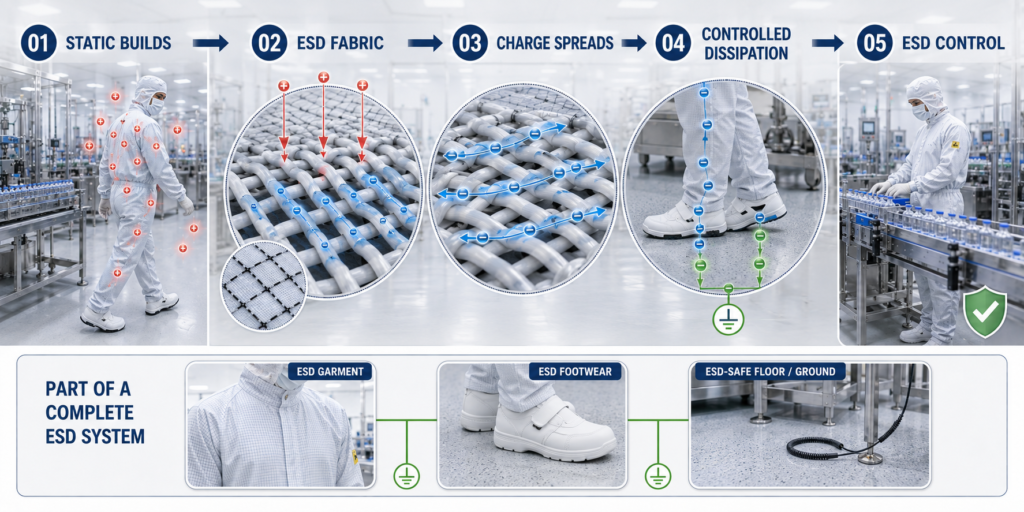
The primary purpose of ESD garments is to help control static charge rather than allowing it to accumulate on the worker or garment.
Specialised ESD fabrics may incorporate conductive or electrostatic dissipative fibres. These fibres provide a controlled pathway that allows static charges to dissipate gradually.
A typical ESD protection system can involve several components working together:
ESD garment + ESD footwear + grounded workstation + appropriate flooring + personnel grounding
This is important because ESD garments should not be viewed as a standalone solution. Their effectiveness depends on how they are integrated into the overall electrostatic control program.
Key Features of High-Quality ESD Garments
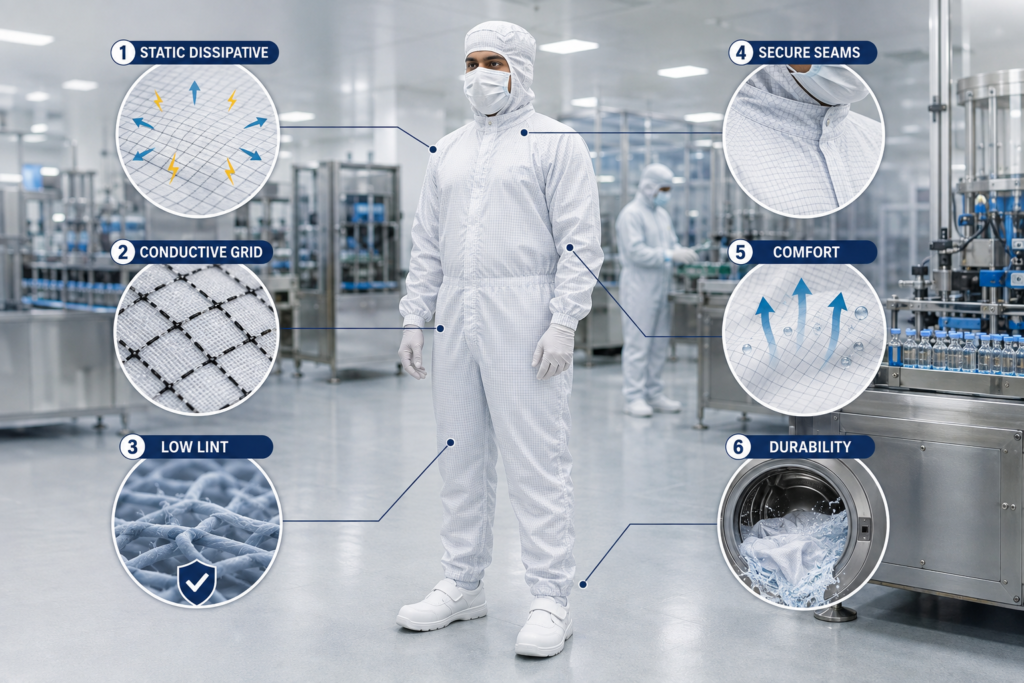
When selecting ESD clothing, businesses should consider more than the appearance of the uniform. Fabric construction, electrical performance, durability, comfort, and compatibility with the working environment all matter.
1. Static Dissipative Fabric
The fabric should have suitable electrostatic properties for the intended application. Special fibres or conductive elements can help prevent excessive static charge accumulation.
2. Conductive Grid or Stripes
Some ESD garments incorporate conductive fibres in a grid or stripe pattern. These conductive elements can help distribute and dissipate electrostatic charge across the garment.
3. Proper Garment Construction
The way an ESD garment is manufactured can influence its performance. Seams, closures, cuffs, pockets, and other components should be designed appropriately for controlled environments.
4. Low-Lint Materials
For electronics manufacturing, laboratories, and cleanroom applications, low-lint fabrics can be particularly important. Excessive lint can contaminate sensitive products and controlled environments.
5. Comfortable Design
Workers may need to wear ESD garments for several hours each day. Lightweight materials, breathable construction, appropriate sizing, and comfortable cuffs can improve employee comfort and compliance.
6. Durability
Industrial garments needs to withstand repeated use and laundering. ESD garments should maintain their required performance throughout their intended service life when properly maintained.
7. Compatibility With the Work Environment
An ESD garment for an electronics assembly facility may have different requirements from clothing used in a cleanroom or laboratory. Always select garments according to the specific workplace requirements.
ESD Garments vs Regular Workwear
Regular workwear primarily focuses on worker comfort, durability, and general workplace protection. It is not necessarily designed to control electrostatic charge.
ESD garments, on the other hand, are specifically engineered to support electrostatic control.

| Feature | Regular Workwear | ESD Garments |
|---|---|---|
| Static control | Generally not designed for it | Designed for electrostatic control |
| Conductive fibres | Usually absent | May be incorporated |
| Electronics manufacturing | Limited suitability | Commonly used |
| Cleanroom compatibility | Depends on fabric | Available in specialised designs |
| ESD control program | Not normally part of it | Designed to support it |
| Fabric requirements | General workwear requirements | Specific electrostatic requirements |
This difference is particularly important in industries where sensitive components can be damaged by electrostatic discharge.
Applications of ESD Garments
ESD clothing is used across a wide range of industries where controlling static electricity is important.
Electronics Manufacturing
Electronics manufacturers work with components such as integrated circuits, circuit boards, sensors, processors, and other sensitive devices. ESD garments can help reduce the risk of static-related damage during assembly, inspection, testing, and handling.
Semiconductor Manufacturing
Semiconductor production requires highly controlled environments. ESD clothing can form part of the personnel protection system used to reduce electrostatic risks.
Cleanrooms
Cleanrooms require specialised clothing to control contamination. ESD cleanroom garments can combine electrostatic control with low-lint and cleanroom-compatible construction.
Pharmaceutical and Laboratory Environments
Certain laboratories and pharmaceutical facilities may require specialised garments depending on their processes, equipment, and environmental controls. Where static-sensitive equipment or materials are involved, ESD-compatible workwear can be useful.
Medical Electronics
Manufacturers of medical electronic devices often handle sensitive components that require careful electrostatic control. ESD clothing can help support controlled manufacturing processes.
Aerospace and Defence Electronics
Highly sensitive electronic systems used in aerospace and defence applications may require strict electrostatic discharge controls throughout manufacturing and assembly.
Benefits of Using ESD Garments
The right ESD clothing can provide several benefits when incorporated into a properly designed ESD control program.
Reduces Static-Related Risks
ESD garments help reduce the accumulation and uncontrolled movement of electrostatic charges.
Protects Sensitive Components
Reducing electrostatic risks can help protect sensitive electronic components from potentially damaging discharges.
Supports Product Quality
Controlling ESD during manufacturing can help reduce defects and improve process consistency.
Helps Maintain Controlled Environments
Specialised ESD workwear can also be manufactured with low-lint or cleanroom-compatible materials for environments where contamination control matters.
Improves Workplace Consistency
Standardised ESD uniforms can help employees follow consistent clothing requirements across production areas.
Supports Compliance
Using appropriate ESD clothing as part of a documented electrostatic control program can help organisations meet applicable industry and workplace requirements.
What Standards Apply to ESD Garments?
ESD protection should be approached systematically rather than relying solely on the garment itself.
One widely recognised framework is IEC 61340-5-1, which provides requirements and guidance for protecting electronic devices from electrostatic phenomena.
Organisations may also use relevant standards and testing methods for evaluating the electrostatic properties of garments and other ESD protective equipment.
However, the exact requirements can vary depending on the industry, product sensitivity, facility design, and ESD control program.
Businesses should therefore identify the applicable standards for their specific operation and verify that their garments have been tested and supplied according to the required specifications.
How to Choose the Right ESD Garments
Selecting ESD clothing requires consideration of both the garment and the environment in which it will be used.
Consider the Application
First identify where the garments will be used. Electronics assembly, semiconductor manufacturing, cleanrooms, laboratories, and general industrial environments may have different requirements.
Check Electrical Performance
Ask the manufacturer for relevant test data and technical specifications. Avoid selecting ESD clothing solely based on appearance or price.
Evaluate Fabric Construction
Consider whether the fabric provides the required combination of static control, durability, comfort, breathability, and contamination control.
Consider Cleanroom Requirements
If garments will be used inside a cleanroom, check whether the garment construction, fabric, packaging, and laundering process are suitable for the required cleanroom classification.
Check Laundering Requirements
ESD workwear require proper care to maintain their performance. Always follow the manufacturer’s recommended washing, drying, and maintenance procedures.
Select the Correct Fit
A garment that fits correctly provides better coverage and is generally more comfortable for employees. Proper sizing can also reduce the temptation for workers to modify or improperly wear their protective clothing.
ESD Garment Maintenance
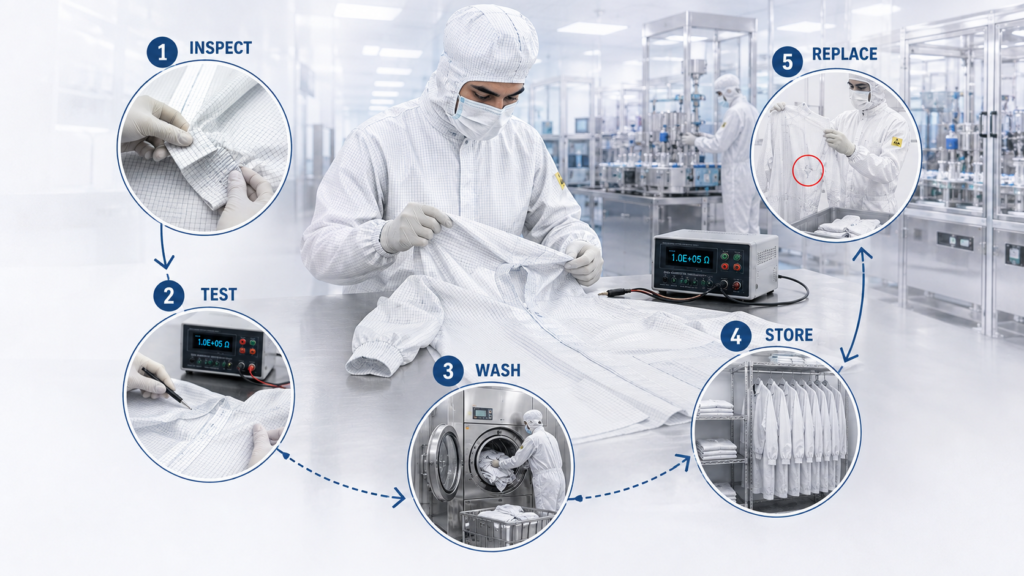
Proper maintenance is essential for preserving the performance of ESD garments.
Organisations should establish clear procedures for:
- Washing and drying
- Inspection
- Storage
- Repairs
- Replacement
- Periodic testing
- Handling damaged garments
Harsh detergents, unsuitable washing methods, fabric softeners, excessive heat, or unauthorised alterations may affect garment performance.
For this reason, businesses should follow the garment manufacturer’s care instructions and include ESD garments in their overall ESD control and maintenance procedures.
Common Mistakes When Buying ESD Clothing
Businesses sometimes focus only on purchasing garments labelled as “ESD” without evaluating their actual requirements.
Some common mistakes include:
Choosing Based Only on Price
Low-cost clothing may not provide the required performance, durability, or comfort.
Ignoring the Complete ESD System
An ESD garment cannot replace proper grounding, ESD footwear, flooring, workstations, and other controls where they are required.
Using the Wrong Fabric
A garment that works well in one environment may not be suitable for another. Fabric selection should consider static control, contamination, temperature, physical activity, and comfort.
Neglecting Testing
ESD performance should be verified according to the applicable requirements rather than assumed from a product label.
Poor Maintenance
Incorrect washing or damaged garments can compromise their intended performance.
ESD Garments for Modern Industrial Environments
As manufacturing becomes increasingly dependent on electronics, automation, sensors, and sensitive equipment, controlling electrostatic discharge is becoming an increasingly important part of industrial operations.
Modern ESD apparels can combine electrostatic protection with other requirements such as comfort, durability, low-lint construction, professional appearance, and cleanroom compatibility.
For companies operating in electronics, semiconductor, pharmaceutical, laboratory, medical technology, aerospace, or other sensitive manufacturing environments, selecting the right protective clothing can contribute to a more controlled and reliable production process.
Conclusion

ESD garments are an important component of electrostatic discharge control in environments where static electricity can affect products, equipment, or manufacturing processes. From ESD coats and smocks to coveralls and specialised cleanroom clothing, the right garment can help control static charge while supporting workplace comfort and operational requirements.
However, ESD clothing should always be considered as part of a complete ESD protection program. Fabric performance, garment construction, grounding, footwear, workstations, maintenance, and testing all play a role in effective static control.
If your facility handles sensitive electronic components or operates in a controlled environment, choosing properly specified ESD Apparel can be an important step toward reducing electrostatic risks and protecting product quality.
Frequently Asked Questions About ESD Garments
What are ESD garments?
ESD garments are specialised workwear designed to help control the accumulation and discharge of electrostatic electricity. They are commonly used in electronics manufacturing, semiconductor facilities, cleanrooms, laboratories, and other controlled environments.
Why are ESD garments used?
ESD garments are used to reduce the risk of uncontrolled electrostatic discharge that could damage sensitive electronic components, equipment, or manufacturing processes.
Are ESD garments the same as antistatic garments?
The terms are sometimes used interchangeably, but they can refer to different levels or approaches to static control. Organisations should evaluate the garment’s actual electrical properties and applicable standards rather than relying solely on terminology.
Can ESD garments be used in cleanrooms?
Yes. Specialised ESD cleanroom garments are available for environments that require both electrostatic control and contamination control. The garment should be selected according to the cleanroom’s specific requirements.
How often should ESD garments be tested?
Testing frequency depends on the organisation’s ESD control program, applicable standards, garment type, usage, and risk level. A documented testing and inspection schedule should be established based on the facility’s requirements.
How should ESD garments be washed?
ESD garments should be washed according to the manufacturer’s care instructions. Incorrect washing, unsuitable detergents, fabric softeners, excessive heat, or improper drying can affect garment performance.
