Workwear Uniform: Building Safer, Stronger, and More Professional Workplaces
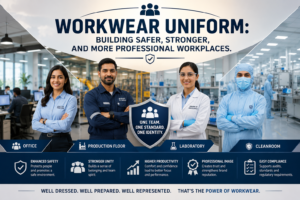
Workwear uniform is much more than a dress code. It is a strategic investment that strengthens organizational identity, enhances professionalism, improves operational efficiency, and creates a more cohesive workplace culture. Whether in corporate offices, manufacturing plants, pharmaceutical laboratories, or cleanroom facilities, standardized workwear uniforms help employees represent their organization with pride while supporting safety, compliance, and brand consistency.
Modern organizations increasingly recognize that uniforms are not simply functional garments—they are an extension of company values, quality standards, and corporate culture.
Types of Workwear Uniform
Different industries require specialized workwear uniforms designed to meet their unique operational needs.
Office Workwear Uniform
Corporate uniforms project a professional image while creating visual consistency across customer-facing teams. Common examples include formal shirts, trousers, business suits, branded polos, blazers, and reception attire.
Production Floor Uniforms
Manufacturing facilities often require durable industrial garments that withstand demanding working conditions. These uniforms prioritize durability, comfort, visibility, and employee safety while supporting efficient daily operations.
Laboratory and Cleanroom Uniforms
Laboratories, pharmaceutical manufacturing facilities, biotechnology companies, and research institutions require specialized laboratory apparel and cleanroom uniforms designed to minimize contamination while maintaining wearer comfort. These garments often incorporate lint-controlled fabrics, secure closures, and ergonomic designs suitable for extended use.
Why Standardized Workwear Uniform Matters
The benefits of adopting standardized workwear uniforms extend far beyond appearance.
Strengthening Organizational Identity
Uniforms visually reinforce a company’s brand and culture. Employees wearing consistent attire immediately communicate professionalism, reliability, and organizational unity to customers, suppliers, auditors, and visitors.
Research in organizational psychology suggests that shared symbols—including uniforms—can strengthen group identity and foster greater social cohesion within teams. Social Identity Theory, developed by psychologists Henri Tajfel and John Turner, explains that individuals often derive part of their identity from belonging to groups, encouraging cooperation and collective responsibility.
Creating a Sense of Belonging
A standardized workwear uniform helps reduce visible status differences within teams by promoting equality in appearance. Employees often report feeling more connected to their organization when they identify as part of a unified workforce.
Studies published in the Journal of Experimental Social Psychology have shown that shared group identity can positively influence cooperation and teamwork, both of which are essential in modern industrial environments.
Operational Benefits of Workwear Uniform extends Beyond Appearance
Organizations that implement standardized uniforms often experience operational improvements that extend throughout the business.
Easier Identification
Visitors, contractors, customers, and emergency responders can quickly identify employees, supervisors, technicians, and specialized personnel based on standardized attire or role-specific color coding.
Improved Audit Readiness
Industries regulated by standards such as ISO 9001, GMP, HACCP, and ISO 45001 benefit from consistent workplace practices. Standardized uniforms demonstrate structured operational procedures and support documentation during internal and external audits.
Although uniforms alone do not ensure compliance, they contribute to an organized workplace culture that aligns with quality management systems.
Enhanced Workplace Safety
Certain workwear uniforms incorporate high-visibility materials, flame-resistant fabrics, chemical-resistant textiles, or anti-static properties depending on workplace hazards. Selecting garments appropriate to workplace risks supports occupational safety programs and complements personal protective equipment (PPE).
Organizations should conduct formal risk assessments before determining the appropriate protective workwear for specific job roles.
Marketing and Brand Advantages of Workwear Uniform
Every employee becomes a brand ambassador.
Whether meeting clients, attending trade exhibitions, visiting customer sites, or interacting with suppliers, professionally designed uniforms reinforce brand recognition and credibility.
Consistent branding across the workforce also improves visual identity in photographs, recruitment campaigns, corporate videos, and social media content.
For organizations operating multiple facilities, standardized uniforms create a unified brand experience regardless of location.
Employee Satisfaction and Professionalism
Comfort plays a significant role in employee acceptance of workwear uniforms.
High-quality fabrics, ergonomic fits, breathable materials, and well-designed garments allow employees to perform comfortably throughout long working hours. Comfortable clothing reduces distractions and supports productivity.
Research on “enclothed cognition,” introduced by psychologists Hajo Adam and Adam D. Galinsky and published in the Journal of Experimental Social Psychology (2012), suggests that clothing associated with professionalism can positively influence attention and task performance when individuals psychologically associate meaning with the garments they wear.
While uniforms alone do not improve productivity, they can contribute to a professional mindset when integrated into a positive organizational culture.
Best Practices for Implementing Workwear Uniform Practice
Organizations seeking maximum value from their uniform program should:
- Select durable, high-quality fabrics suited to the work environment.
- Prioritize employee comfort and proper garment fit.
- Standardize branding across all departments.
- Maintain consistent laundering and garment replacement schedules.
- Define clear uniform policies for employees and contractors.
- Review uniform requirements periodically as operational needs evolve.
Employee involvement during uniform selection also improves acceptance and long-term satisfaction.
Building the Worwear Uniform Environment of the Future
As industries become increasingly quality-driven, standardized workwear uniform are evolving from optional dress policies into strategic business assets. They strengthen organizational identity, improve workplace professionalism, support operational consistency, enhance customer confidence, and contribute to employee engagement.
Forward-looking organizations understand that every interaction shapes their reputation. A well-designed uniform communicates attention to detail, commitment to quality, and respect for employees and customers alike.
Investing in thoughtfully designed workwear uniforms is therefore not simply about clothing—it is about building a stronger organizational culture, improving operational excellence, and creating a workplace where employees are proud to belong.
Organizations that embrace these principles today position themselves for greater trust, stronger brand recognition, and sustainable long-term success.
